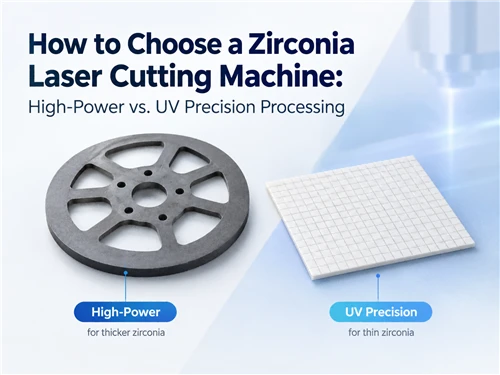
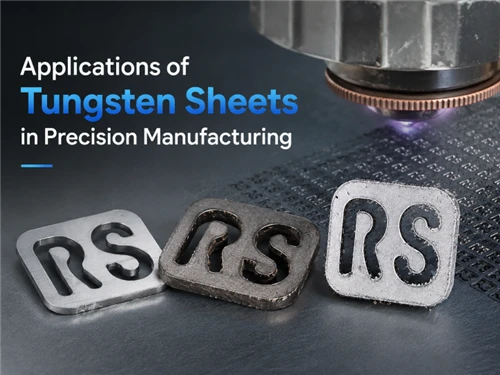
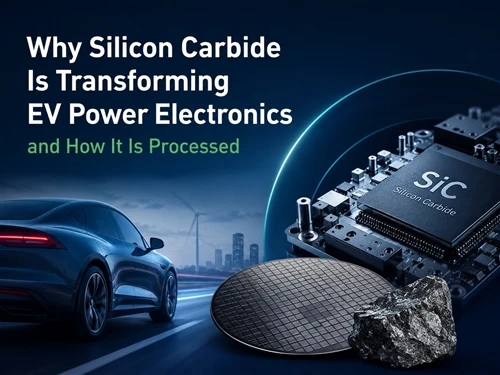
The main difference between infrared (IR) and ultraviolet (UV) lasers lies in their wavelength, which directly affects processing principles, precision, material compatibility, and cost. In simple terms, infrared lasers are typically used for thermal processing, while ultraviolet lasers are better suited for "cold processing."
Below is a parameter comparison of YCLaser's infrared picosecond laser cutting machines and ultraviolet picosecond laser cutting machines.
| Item | Parameter (UV) | Parameter (IR) |
| Laser | 355nm 10- 30W picosecond infrared laser | 1064nm 50W picosecond infrared laser |
| Laser Pulse Width | <15ps | <30ps |
| Processing Area | 400x400mm | 500x600mm |
| Single Cutting Area | 50x50mm | 50x50mm |
| Minimum line width | 8μm | 10μm |
| Laser frequency range | 100Hz-2000kHz | 100Hz-2000kHz |
| Minimum Aperture Width | / | 25μm |
| Minimum Etching Line Width | / | 10um (ITO conductive glass) |
| Minimum line spacing | 10μm | 15μm |
| Table positioning accuracy | ±2um | ±2um |
| Straightness | ±5μm | ±5μm |
| Table repeatability | ±2um | ±2um |
| Z-axis travel | 50mm | 50mm |
| CCD auto-positioning accuracy | ±2um | ±2um |
| Scanning speed | Maximum speed 5000mm/s | Maximum speed 10000mm/s |
| Equipment dimensions | 1500mmL×1650mmW×1800mmH | 1500mmL×1600mmW×1800mmH |
| Adsorption system | Fan airflow 100m3/h | Fan airflow 100m3/h |
| Chiller | The water chiller has a temperature control range of 18℃~24℃ and a temperature control accuracy of ≤0.2℃. | |
| Power consumption | 3000W | |
| Software system | It features galvanometer scanning and platform movement linkage; it also has functions for controlling laser processing parameters; and it meets CAD file import requirements, accommodating drawings larger than 1GB for processing. | |
| Equipment casing | The equipment is fully enclosed and has an internal door switch to prevent the laser from posing a danger to people. | |
| Processable file formats | Standard DXF file | |
Core differences
| Comparison Dimensions: | Infrared Laser (IR Laser) | Ultraviolet Laser (UV Laser) |
| Typical Wavelength: | 1064 nm (Common) | 355 nm (Common) |
| Processing Principle: | Hot Processing: Melting and vaporizing materials with thermal energy | Cold Processing: Breaking molecular bonds with high-energy photons |
| Precision: | Lower precision, larger spot size | Extremely high precision, extremely small spot size |
| Thermal Impact Factors: | Significant, prone to thermal damage areas | Minimal, almost no thermal damage |
| Applicable Materials: | Metals, wood, acrylic, etc. | Plastics, glass, ceramics, metal surfaces |
| Cost | Relatively economical in terms of equipment purchase and maintenance costs, long lifespan | Relatively high cost, high maintenance requirements |
| Features | Excellent at rapid cutting, welding, and deep engraving of hard materials such as metals. | Ultra-short wavelengths can be focused into extremely small spots, enabling micron- or even nanometer-level processing with smooth, burr-free edges. |
| Applications | Automotive manufacturing, aerospace, industrial marking, etc. | Precision manufacturing fields such as semiconductors, PCBs (printed circuit boards), medical devices, and displays. |
How to Choose?
YCLaser can recommend the most suitable and cost-effective solution based on your specific materials, precision requirements, and production needs. Feel free to contact us for more details.