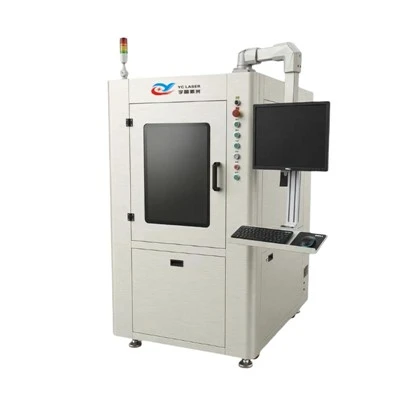
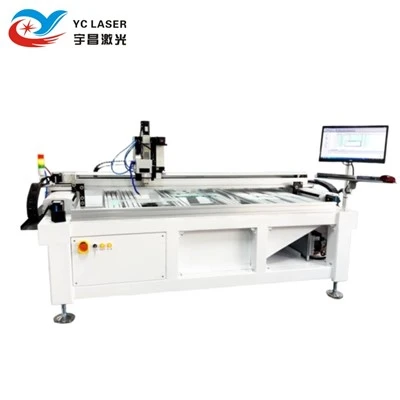
Alumina (Al₂O₃) Laser Cutting Machine
Precision laser cutting, drilling and scribing solutions for alumina ceramic substrates and components.

-
![Metallized Ceramic Laser Scribing Machine]() Metallized Ceramic Laser Scribing Machine✅ 355nm UV Cold Processing (No metal peeling)✅ ≤20μm Kerf Width (High-density scribing)✅ IGBT / 5G / Auto Ready (CCD Auto-Align)
-
![Alumina AMB Substrate Laser Cutting Machine]() Alumina AMB Substrate Laser Cutting MachineActive Metal Brazed (AMB) ceramic substrates are widely used in high-power and high-reliability applications such as SiC power modules, GaN devices, electric vehicles (EVs), energy storage systems,
-
![Alumina DPC Substrate Laser Cutting Machine]() Alumina DPC Substrate Laser Cutting MachineThe Alumina DPC Substrate Laser Cutting Machine is specially designed for precision processing of DPC ceramic substrates. It supports laser drilling, laser cutting, and laser scribing , and is
-
![Alumina DBC Substrate Laser Cutting Machine]() Alumina DBC Substrate Laser Cutting MachineIn the packaging of power semiconductor modules such as IGBT and MOSFET, Direct Bonded Copper (DBC) ceramic substrates have become indispensable materials thanks to their low thermal resistance,
-
![Alumina Ceramic Substrate Laser Cutting Machine]() Alumina Ceramic Substrate Laser Cutting MachineThe Alumina Ceramic Substrate Laser Cutting Machine is a precision laser processing system specially designed for Al₂O₃ ceramic substrates . Equipped with a customized precision laser system,
-
![Alumina LTCC Ceramic Laser Cutting Machine]() Alumina LTCC Ceramic Laser Cutting MachineThe Alumina & LTCC Ceramic Laser Cutting Machine is designed for precision machining of LTCC (Low Temperature Co-fired Ceramic) and sintered alumina ceramic substrates. It is widely used in the
-
![LED Sensor Ceramic Laser Drilling Machine]() LED Sensor Ceramic Laser Drilling MachineThe LED Sensor Ceramic Laser Drilling Machine is designed for precision micro-machining of ceramic substrates used in LED and sensor applications. Built on our proven precision laser processing
-
![Ceramics Laser Dicing Machine]() Ceramics Laser Dicing MachineThe Ceramics Laser Dicing Machine is designed for high-precision dicing and scribing of ceramic substrates. It is particularly suitable for Al₂O₃, AlN, and metallized ceramic, packaging material


Alumina Laser Processing Capability
YCLaser provides multiple laser technologies for Al₂O₃ (alumina) processing, allowing the laser source and process configuration to be selected according to material thickness, feature size, geometry, edge-quality requirements and production efficiency.
| Laser Technology | Typical Strength | Suitable Alumina Applications |
| QCW Fiber Laser | Higher processing efficiency and stronger capability for thicker ceramics | Thicker alumina components, structural ceramics, larger contours and higher-throughput cutting |
| 355 nm UV Nanosecond | Precision processing with low thermal impact | Thin alumina substrates, ceramic circuits, micro-holes, fine contours and precision cutting |
| UV Picosecond | Ultra-short pulse processing for demanding precision applications | Fine micro-machining, high-quality edges, small features and applications with stricter thermal-damage requirements |

There is no single laser source that is optimal for every alumina application. Yuchang selects the appropriate laser technology based on material grade, thickness, geometry, minimum feature size, edge quality and production requirements.
For precision electronic ceramic substrates, UV nanosecond and UV picosecond systems can be considered. For thicker or more productivity-oriented alumina components, QCW fiber laser solutions can provide a different balance between processing efficiency and cutting capability.
Sample testing is recommended before final machine selection to validate the processing method and determine the appropriate laser configuration.
Alumina Laser Cutting Machine Specifications
YCLaser offers different alumina laser processing configurations according to material grade, thickness, feature size, geometry, edge-quality requirements and production volume. The following specifications represent typical configurations; the final machine setup can be customized for specific applications.
| Specification | Typical Configuration |
| Laser Technology | 355 nm UV Nanosecond / UV Picosecond / QCW Fiber |
| Laser Power | Selected according to material thickness and processing requirements |
| Processing Area | Customizable according to workpiece size and production requirements |
| Processing Methods | Cutting / Drilling / Scribing / Dicing / Grooving |
| Minimum Feature Size | Down to approximately 0.05 mm in selected applications |
| Positioning Accuracy | Up to approximately ±3 μm, depending on machine configuration |
| Repeatability | Up to approximately ±2 μm, depending on machine configuration |
| Vision Positioning | CCD vision positioning available |
| Scanning Speed | Up to approximately 4,000 mm/s for selected UV configurations |
| Automation Options | Automatic loading/unloading, dual-head processing and customized automation |
| CAD / File Support | DXF and other formats according to control software |

Alumina Cutting
Drilling & Scribing Solutions

Typical Alumina Samples
Alumina Laser Processing by Thickness


FAQ
Q1. What grades of alumina can your laser machine process?
A: Our laser systems can process different grades of Al₂O₃ alumina ceramics, including commonly used 96% and 99% alumina. We also provide solutions for alumina ceramic substrates, metallized ceramics, DBC, DPC, AMB, HTCC and LTCC applications. The laser source and process parameters are selected according to alumina purity, thickness, geometry and required edge quality.
Related article: Alumina Ceramic Substrate Laser Cutting Standards for Electronic Packaging
Q2. What thickness of alumina can be laser cut?
A: The suitable thickness depends on the alumina grade, geometry, required edge quality and production target. For thin electronic ceramic substrates, 355 nm UV nanosecond laser is commonly used, while QCW fiber laser can be considered for thicker alumina components and higher-throughput applications. For demanding micro-machining, UV picosecond laser may be selected.
As a practical reference, our published process guidance covers approximately 0.2–1.2 mm alumina substrates with UV nanosecond processing and approximately 1–6 mm thick industrial alumina with QCW fiber solutions. Actual capability should be verified through sample testing.
Related article: Which Laser Wavelength Is Best for Alumina Ceramic Cutting?
Q3. Is 355 nm UV laser suitable for alumina ceramic substrates?
A: Yes. 355 nm UV nanosecond laser is well suited to many thin alumina ceramic substrates, particularly applications requiring precision cutting, drilling, scribing and controlled thermal impact. It is commonly used for electronic packaging substrates and precision ceramic components.
For applications requiring even finer micro-features or tighter control of thermal effects, UV picosecond laser can be considered. For thicker alumina components where processing efficiency is a priority, QCW fiber laser may be more appropriate.
Related article: Which Laser Wavelength Is Best for Alumina Ceramic Cutting?
Q4. Can the machine process DBC, DPC and AMB alumina substrates?
A: Yes. Our alumina laser processing solutions can be configured for DBC, DPC and AMB ceramic substrates, including profile cutting, scribing, grooving and micro-hole processing.
For AMB substrates, the process must also consider the interaction between the copper layer, active brazing layer and alumina ceramic. Our dedicated AMB system uses UV laser processing, energy control and precision motion to help minimize thermal impact on the brazed interface.
Related page: Alumina AMB Substrate Laser Cutting Machine
Related article: Guide to Laser Cutting Metal-Ceramic Composites
Q: 5. What minimum hole diameter can be achieved in alumina?
A: The achievable hole diameter depends strongly on alumina purity, thickness, laser source, hole depth and processing method. In selected alumina applications, laser drilling can reach approximately 0.05 mm (50 μm) holes under suitable conditions.
For demanding micro-hole applications, UV picosecond laser can be considered for approximately 20–50 μm features, while nanosecond laser systems can provide a practical balance between hole size, processing efficiency and production cost.
Related article: How Small Can a Ceramic Laser Drilling Machine Drill Holes in Alumina?
Q6. Can you test our alumina samples before we purchase the machine?
A: Yes. Sample testing and process evaluation are available before equipment purchase. You can provide your alumina sample, CAD drawing or processing requirements. Our engineering team can evaluate cutting or drilling quality and recommend a suitable laser source, power level and machine configuration.
This approach helps verify processing feasibility, edge quality, hole quality and production requirements before the final equipment configuration is selected.
Contact us for sample testing
Q7. What information is required to recommend an alumina laser cutting system?
A: To recommend a suitable alumina laser system, we normally need the following information:
- Alumina grade or purity
- Material thickness
- Workpiece dimensions
- Cutting, drilling or scribing requirements
- Minimum hole diameter or slot width
- Required dimensional tolerance
- Edge-quality requirements
- Expected production volume
- CAD drawings or sample parts
Based on these details, we can evaluate whether UV nanosecond, UV picosecond or QCW fiber laser is the most appropriate solution.
Related article: Key Components of a Ceramic Laser Cutting Machine
Q8. Can the machine be integrated with automatic loading and unloading?
A: Yes. Alumina laser systems can be customized for different levels of automation, including automatic loading and unloading, dual-head processing, CCD vision positioning, dual workstations and production-line integration.
Related page: Automatic Ceramic Laser Cutting Machine
We are one of the most professional al₂o₃ laser cutting machine manufacturers and suppliers in China, also support customized service. Be free to buy industrial al₂o₃ laser cutting machine for sale here and get quotation from our factory. For price consultation, contact us.
High Speed Spiral Laser Drilling Machine, Alumina Ceramics UV Laser Drilling Machine, Green State Alumina Laser Drilling Machine