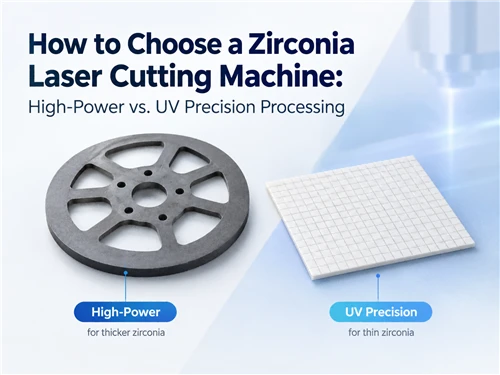
Cutting hydrogen fuel cell components-especially solid oxide fuel cells (SOFC), such as ceramic electrolytes and bipolar plates-requires extremely high precision.
These components are typically made of advanced ceramic materials that are hard, brittle, and thin. As a result, conventional cutting methods often lead to edge chipping, micro-cracks, and thermal damage, which can compromise sealing performance and overall efficiency.
Why UV Laser Cutting Is Recommended
For this type of application, UV picosecond laser cutting is widely considered the most effective solution.
UV lasers enable so-called "cold processing," where high-energy photons directly break molecular bonds instead of relying on heat.
This results in:
Minimal heat-affected zone (HAZ)
Clean, smooth कट edges
No chipping or micro-cracking
This significantly improves the yield and reliability of fuel cell components.
Key Process Considerations
Achieving stable and high-quality results depends on proper parameter control. Simply increasing laser power is not the answer-precision matters more than intensity.
1. Pulse Strategy
For thin ceramic fuel cell layers, it is recommended to use:
High frequency
Low single-pulse energy
Multi-pass scanning
This approach helps prevent sudden heat buildup that can cause cracking or material breakage.
2. Cutting Speed
Cutting speed must be carefully balanced:
Too slow → excessive heat accumulation
Too fast → incomplete cutting
Finding the optimal "sweet spot" is essential for consistent results.
3. Focus Position (Defocus Control)
Accurate focus positioning is critical.
In most cases, the focal point should be set on or slightly below the material surface to ensure stable kerf width and clean edges.
4. Assist Gas
Using high-pressure clean gas (such as nitrogen or compressed air) is highly recommended.
Assist gas helps to:
Remove molten debris
Cool the cutting area
Prevent recast layers
Proven Solutions from Yuchang Laser
Through extensive testing and real-world applications, Yuchang Laser has developed optimized process parameters specifically for ceramic fuel cell materials.
Our laser cutting systems are designed to deliver:
Stable, crack-free cutting results
High precision for thin and brittle ceramics
Consistent performance for both prototyping and mass production
Conclusion
Cutting hydrogen fuel cell ceramics is a challenging task that demands both the right equipment and the right process strategy.
UV picosecond laser technology, combined with optimized parameters, offers a reliable way to achieve high-quality, damage-free cutting.
If you have sample testing or processing requirements, feel free to contact us for technical support and customized solutions.