Laser cutting machines use a highly focused laser beam to achieve precision material removal. Due to the high energy density of the laser, materials can be melted, vaporized, or removed efficiently within a very small area.
After focusing, the laser forms a narrow and highly concentrated beam. When it hits the workpiece surface, part of the energy is absorbed and converted into heat.
For ceramic materials, the absorption depth is extremely shallow (typically only a few micrometers). This means heat is concentrated near the surface, causing the local temperature to rise rapidly to the melting or vaporization point.
As the process continues:
The material at the focal spot melts or vaporizes
Surrounding material is affected by thermal diffusion
Vapor expansion creates a micro-ejection effect, removing molten material
This is how laser cutting achieves high precision and clean edges, especially for hard and brittle materials like ceramics.
Main Components of a Laser Cutting Machine

A typical laser cutting system consists of three main parts:
1. Laser Source (Laser Generator)
The laser source generates the beam and largely determines processing performance.
For ceramic laser cutting, commonly used laser types include:
YAG lasers (continuous or high-frequency pulsed)
CO₂ lasers
QCW fiber lasers (increasingly popular)
With ongoing technological development, QCW fiber lasers are gradually replacing traditional YAG lasers due to:
Higher peak power
Lower heat input
Better efficiency and stability
2. Optical System
The optical system transmits and focuses the laser beam.
It typically includes:
Mirrors
Lenses
Nozzles
Its role is to convert the parallel laser beam into a highly focused spot, ensuring stable cutting quality.
3. Worktable / Motion System
The worktable provides multi-axis movement, allowing precise positioning and processing of the workpiece.
Combined with CNC control, it enables:
Complex path cutting
High repeatability
Micron-level positioning
Key Factors Affecting Laser Processing Quality
In ceramic and metal laser cutting, processing quality depends on multiple factors:
Laser wavelength and pulse mode
Beam shape and focal position
Material composition and surface condition
Feed rate and processing path
Nozzle position and assist conditions
Careful control of laser power density, exposure time, and focus position is essential for achieving stable and high-quality results.
Material Properties and Laser Processing Performance
Material thermal properties play a critical role in laser processing.
For example:
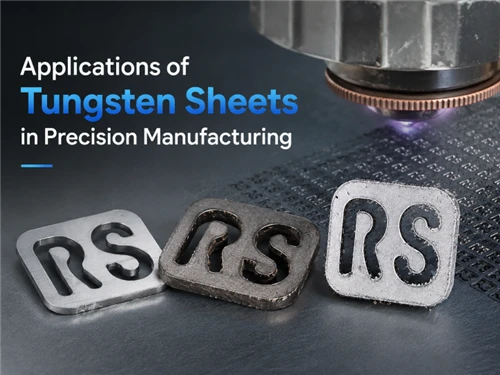
Tungsten → very high melting point
Copper → very high thermal conductivity
Both are considered difficult-to-process materials, similar to many advanced ceramics.
NY Value: A Simple Indicator of Machinability
A commonly used parameter to evaluate laser processing difficulty is:
NY = Tₘ × λ
Where:
Tₘ = melting point (K)
λ = thermal conductivity (W·m⁻¹·K⁻¹)
Lower NY value = easier to process
Typical Material Comparison
Among ceramic materials:
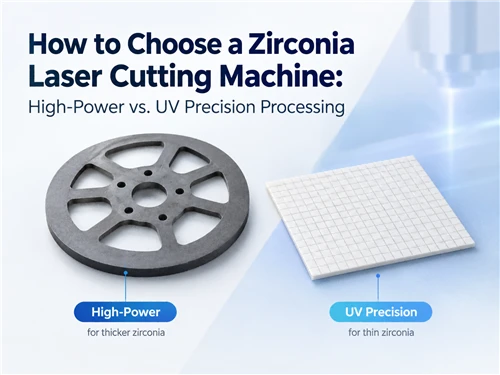
ZrO₂ (zirconia) shows the best machinability
Its removal efficiency can be over 3× higher than Si₃N₄
Applications of Laser Cutting for Advanced Materials
Yuchang Laser's systems are widely used for precision processing of various materials, including:
Tungsten sheets
Copper substrates
Iron
Silicon carbide (SiC)
Alumina (Al₂O₃)
Silicon nitride (Si₃N₄)
Zirconia (ZrO₂)
These materials are commonly used in:
Electronics
Semiconductors
Advanced ceramics
Industrial components
Watch Our Processing Videos
We regularly share real processing cases and sample results:
-----YouTube: https://youtube.com/@yclaser
-----TikTok: https://vt.tiktok.com/ZSuUavXEw/
Processing Services & Support
In addition to equipment manufacturing, we also provide:
Sample processing
Process validation
Technical support
If you have laser cutting or ceramic processing requirements, feel free to contact us.
We're ready to support your projects with reliable solutions and consistent quality.