In the fields of electronics, semiconductors, power devices, and advanced packaging, the substrate is a crucial material that carries the chip, provides electrical connections, and facilitates heat dissipation. Different applications have vastly different requirements for the substrate's thermal conductivity, insulation, thermal expansion matching, and high-frequency performance.
The following are classifications of mainstream substrate materials and their typical applications.
Classified by Material Type: 6 Mainstream Substrates
| Substrate Type | Representative Material | Thermal Conductivity (W/m·K) | Electrical Insulation | Typical Applications |
| Organic Substrates | FR-4 (Epoxy Resin + Glass Fiber)ABF (Ajinomoto Build-up Film) | 0.3–0.5 | ✅ Good | •Consumer Electronics Motherboards• Mobile Phone/Computer PCBs• Packaging Substrates (ABF for CPU/GPU) |
| Metal Substrates | Aluminum-based (Al)Copper-based (Cu) | 1–2 (Integral)(High thermal conductivity of the metal core, but low insulation layer) | Requires insulation layer | • LED Lighting• Power Modules• Automotive Electronics |
| Ceramic Substrates | Aluminum Oxide (Al₂O₃)Aluminum Nitride (AlN)Silicon Carbide (SiC) | 24–35170–220120–200 (But usually conductive!) | ✅✅✅✅✅❌ (SiC is a semiconductor) | • Power modules (IGBT)• LED brackets• RF devices• Sensors |
| Direct-bonded copper (DBC) | Al₂O₃ + CuAlN + Cu | 24–35170–200 | ✅ (Ceramic layer insulation) | • Electric vehicle inverters• Photovoltaic inverters• Industrial motor drives |
| Active metal brazing (AMB) | AlN + Cu (active solder) | 170–200 | ✅ | • High-end EV main drive (800V platform)• Rail transportation |
| Silicon/glass substrate | Monocrystalline siliconUltra-thin glass | 1501.0 | ❌ (Si conducts electricity)✅ | • 2.5D/3D IC packaging• Fan-Out• MEMS |
Key Selection Guide: Matching to Needs
✅ Requires "High Thermal Conductivity + High Insulation" → Choose Ceramic Substrates
Cost-Effective Option: 96% Alumina (Al₂O₃)
Low cost, suitable for medium-power LEDs and industrial power supplies
High-Performance Option: Aluminum Nitride (AlN)
Thermal conductivity is 6–8 times that of Al₂O₃, used in EVs, 5G base stations, and lasers
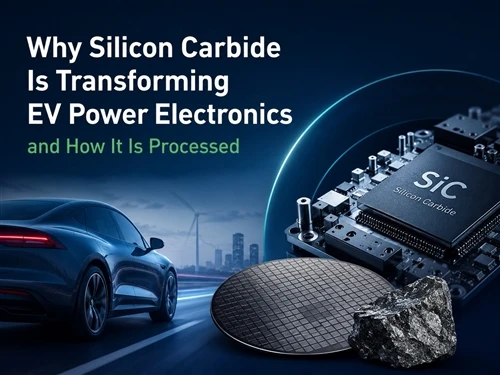
Note: Although silicon carbide (SiC) has high thermal conductivity, it is electrically conductive and cannot be directly used as an insulating substrate! It is only used as a substrate (non-packaging substrate) for SiC power devices.
✅ For "high frequency, low loss" → Choose special ceramics or glass
LTCC (Low Temperature Co-fired Ceramic): Used in millimeter-wave modules (5G/radar)
Quartz/glass substrates: Stable dielectric constant, used in RF MEMS
✅ For "low cost + large area" → Choose organic substrates
FR-4: Mainstream in consumer electronics
ABF: High-end CPU/GPU packaging (e.g., Intel, AMD)
✅ For "ultimate heat dissipation + high reliability" → Choose DBC/AMB
DBC on AlN: Used in Tesla Model 3 inverters
AMB: Stronger bonding than DBC, better resistance to thermal fatigue
Summary: There is no "best" substrate, only the "most suitable" substrate.
Consumer Electronics → Organic Substrates (ABF/FR-4)
Power Electronics → Ceramic Substrates (AlN/Al₂O₃) + DBC/AMB
High-Frequency Communication → LTCC / Glass
Advanced Packaging → Silicon Interposer + Organic Redistribution
For substrate processing needs, please contact us. Yuchang Laser provides free samples for testing.